- Description
- Curriculum
- FAQ
- Reviews
 To book a demo class, Click Here
Subjects Covered: Mathematics, Physics and Chemistry
SYLLABUS:
MATHEMATICS
Unit-I: Relations and Functions
1. Relations and Functions : Types of relations: reflexive, symmetric, transitive and equivalence relations. One to one and onto functions.
2. Inverse Trigonometric Functions: Definition, range, domain, principal value branch. Graphs of inverse trigonometric functions.
Unit-II: Algebra
1. Matrices: Concept, notation, order, equality, types of matrices, zero and identity matrix, transpose of a matrix, symmetric and skew symmetric matrices. Operations on matrices: Addition and multiplication and multiplication with a scalar. Simple properties of addition, multiplication and scalar multiplication. Non- commutativity of multiplication of matrices and existence of non-zero matrices whose product is the zero matrix (restrict to square matrices of order 2). Invertible matrices and proof of the uniqueness of inverse, if it exists; (Here all matrices will have real entries).
2. Determinants: Determinant of a square matrix (up to 3 x 3 matrices), minors, co-factors and applications of determinants in finding the area of a triangle. Adjoint and inverse of a square matrix. Consistency, inconsistency and number of solutions of system of linear equations by examples, solving system of linear equations in two or three variables (having unique solution) using inverse of a matrix.
Unit-III: Calculus
1. Continuity and Differentiability: Continuity and differentiability, chain rule, derivative of composite functions, derivatives of inverse trigonometric functions like sin−1 𝑥, cos−1 𝑥 and tan−1 𝑥, derivative of implicit functions. Concept of exponential and logarithmic functions. Derivatives of logarithmic and exponential functions. Logarithmic differentiation, derivative of functions expressed in parametric forms. Second order derivatives.
2. Applications of Derivatives: Applications of derivatives: rate of change of quantities, increasing/decreasing functions, maxima and minima (first derivative test motivated geometrically and second derivative test given as a provable tool). Simple problems (that illustrate basic principles and understanding of the subject as well as real- life situations).
3. Integrals: Integration as inverse process of differentiation. Integration of a variety of functions by substitution, by partial fractions and by parts, Evaluation of simple integrals of the following types and problems based on them.

Fundamental Theorem of Calculus (without proof). Basic properties of definite integrals and evaluation of definite integrals.
4. Application of the Integrals: Applications in finding the area under simple curves, especially lines, circles/ parabolas/ellipses (in standard form only)
5. Differential Equations: Definition, order and degree, general and particular solutions of a differential equation. Solution of differential equations by method of separation of variables, solutions of homogeneous differential equations of first order and first degree. Solutions of linear differential equation of the type:

Unit-IV: Vectors and Three-dimensional Geometry
1. Vectors: Vectors and scalars, magnitude and direction of a vector. Direction cosines and direction ratios of a vector. Types of vectors (equal, unit, zero, parallel and collinear vectors), position vector of a point, negative of a vector, components of a vector, addition of vectors, multiplication of a vector by a scalar, position vector of a point dividing a line segment in a given ratio. Definition, Geometrical Interpretation, properties and application of scalar (dot) product of vectors, vector (cross) product of vectors.
2. Three-dimensional Geometry:
Direction cosines and direction ratios of a line joining two points. Cartesian equation and vector equation of a line, skew lines, shortest distance between two lines. Angle between two lines.
Unit-V: Linear Programming Problem
1. Linear Programming: Introduction, related terminology such as constraints, objective function, optimization, graphical method of solution for problems in two variables, feasible and infeasible regions (bounded or unbounded), feasible and infeasible solutions, optimal feasible solutions (up to three non-trivial constraints).
Unit-VI: Probability
1. Probability: Conditional probability, multiplication theorem on probability, independent events, total probability, Bayes’ theorem.
PHYSICS
UNIT I: ELECTROSTATICS
Chapter–1: Electric Charges and Fields
Electric Charges – Conservation of Charge – Coulomb’s Law: Force between Two Point Charges – Forces between Multiple Charges – Superposition Principle and Continuous Charge Distribution – Electric Field – Electric Field due to a Point Charge – Electric Field Lines – Electric Dipole – Electric Field due to a Dipole – Torque on a Dipole in Uniform Electric Field – Electric Flux – Gauss’s Theorem (Statement) and its Applications to Find Electric Field due to Infinitely Long Straight Wire, Uniformly Charged Infinite Plane Sheet and Uniformly Charged Thin Spherical Shell (Field Inside and Outside).
Chapter–2: Electrostatic Potential and Capacitance
Electric Potential – Potential Difference – Electric Potential due to a Point Charge – Electric Potential due to a Dipole – Electric Potential due to a System of Charges – Equipotential Surfaces – Electrical Potential Energy of a System of Two Point Charges – Electrical Potential Energy of an Electric Dipole in an Electrostatic Field – Conductors and Insulators – Free Charges and Bound Charges Inside a Conductor – Dielectrics and Electric Polarization – Capacitors and Capacitance – Combination of Capacitors in Series and Parallel – Capacitance of a Parallel Plate Capacitor with and without Dielectric Medium – Energy Stored in a Capacitor (Formulae Only, No Derivation).
UNIT II: CURRENT ELECTRICITY
Chapter–3: Current Electricity
Electric Current – Flow of Electric Charges in a Metallic Conductor – Drift Velocity – Mobility and their Relation with Electric Current – Ohm’s Law – V-I Characteristics (Linear and Non-Linear) – Electrical Energy and Power – Electrical Resistivity and Conductivity – Temperature Dependence of Resistance – Internal Resistance of a Cell – Potential Difference and EMF of a Cell – Combination of Cells in Series and Parallel – Kirchhoff’s Rules – Wheatstone Bridge.
UNIT III: MAGNETIC EFFECTS OF CURRENT AND MAGNETISM
Chapter–4: Moving Charges and Magnetism
Concept of Magnetic Field – Oersted’s Experiment – Biot-Savart Law and its Application to Current Carrying Circular Loop – Ampere’s Law and its Applications to Infinitely Long Straight Wire – Straight Solenoid (Qualitative Treatment Only) – Force on a Moving Charge in Uniform Magnetic and Electric Fields – Force on a Current Carrying Conductor in a Uniform Magnetic Field – Force Between Two Parallel Current Carrying Conductors – Definition of Ampere – Torque Experienced by a Current Loop in Uniform Magnetic Field – Current Loop as a Magnetic Dipole and its Magnetic Dipole Moment – Moving Coil Galvanometer – Current Sensitivity and Conversion into Ammeter and Voltmeter.
Chapter–5: Magnetism and Matter
Bar Magnet – Bar Magnet as an Equivalent Solenoid (Qualitative Treatment Only) – Magnetic Field Intensity due to a Magnetic Dipole (Bar Magnet) Along its Axis and Perpendicular to its Axis (Qualitative Treatment Only) – Torque on a Magnetic Dipole (Bar Magnet) in Uniform Magnetic Field (Qualitative Treatment Only) – Magnetic Field Lines – Magnetic Properties of Materials: Para-, Dia- and Ferro-Magnetic Substances with Examples – Magnetization of Materials – Effect of Temperature on Magnetic Properties.
UNIT IV: ELECTROMAGNETIC INDUCTION AND ALTERNATING CURRENT
Chapter–6: Electromagnetic Induction
Electromagnetic Induction – Faraday’s Laws – Induced EMF and Current – Lenz’s Law – Self Induction – Mutual Induction.
Chapter–7: Alternating Current
Alternating Current – Peak and RMS Value of Alternating Current/Voltage – Reactance and Impedance – LCR Series Circuit (Phasors Only) – Resonance – Power in AC Circuits – Power Factor – Wattless Current – AC Generator – Transformer.
UNIT V: ELECTROMAGNETIC WAVES
Chapter–8: Electromagnetic Waves
Basic Idea of Displacement Current – Electromagnetic Waves – Characteristics of Electromagnetic Waves – Transverse Nature of Electromagnetic Waves (Qualitative Idea Only) – Electromagnetic Spectrum: Radio Waves, Microwaves, Infrared, Visible, Ultraviolet, X-rays and Gamma Rays – Elementary Facts about their Uses.
UNIT VI: OPTICS
Chapter–9: Ray Optics and Optical Instruments
Reflection of Light – Spherical Mirrors – Mirror Formula – Refraction of Light – Total Internal Reflection – Optical Fibres – Refraction at Spherical Surfaces – Lenses – Thin Lens Formula – Lens Maker’s Formula – Magnification – Power of a Lens – Combination of Thin Lenses in Contact – Refraction of Light Through a Prism – Optical Instruments – Microscopes – Astronomical Telescopes (Reflecting and Refracting) and their Magnifying Powers.
Chapter–10: Wave Optics
Wave Front and Huygen’s Principle – Reflection and Refraction of Plane Wave at a Plane Surface Using Wave Fronts – Proof of Laws of Reflection and Refraction Using Huygen’s Principle – Interference – Young’s Double Slit Experiment – Expression for Fringe Width (Final Expression Only, No Derivation) – Coherent Sources – Sustained Interference of Light – Diffraction due to a Single Slit – Width of Central Maxima (Qualitative Treatment Only).
UNIT VII: DUAL NATURE OF RADIATION AND MATTER
Chapter–11: Dual Nature of Radiation and Matter
Dual Nature of Radiation – Photoelectric Effect – Hertz and Lenard’s Observations – Einstein’s Photoelectric Equation – Particle Nature of Light – Experimental Study of Photoelectric Effect – Matter Waves – Wave Nature of Particles – de-Broglie Relation.
UNIT VIII: ATOMS AND NUCLEI
Chapter–12: Atoms
Alpha Particle Scattering Experiment – Rutherford’s Model of Atom – Bohr Model of Hydrogen Atom – Expression for Radius of nth Possible Orbit – Velocity and Energy of Electron in nth Orbit – Hydrogen Line Spectra (Qualitative Treatment Only).
Chapter–13: Nuclei
Composition and Size of Nucleus – Nuclear Force – Mass-Energy Relation – Mass Defect – Binding Energy per Nucleon and its Variation with Mass Number – Nuclear Fission – Nuclear Fusion.
UNIT IX: ELECTRONIC DEVICES
Chapter–14: Semiconductor Electronics: Materials, Devices and Simple Circuits
Energy Bands in Conductors, Semiconductors and Insulators (Qualitative Ideas Only) – Intrinsic and Extrinsic Semiconductors – p-type and n-type Semiconductors – p-n Junction – Semiconductor Diode – I-V Characteristics in Forward and Reverse Bias – Application of Junction Diode – Diode as a Rectifier.
CHEMISTRY
Unit 1: Solutions
Types of Solutions – Expression of Concentration of Solutions – Solubility – Vapour Pressure of Liquid Solutions – Ideal and Non-Ideal Solutions – Colligative Properties – Determination of Molar Mass – Abnormal Molecular Masses.
Unit 2: Electrochemistry
Electrochemical Cells – Galvanic Cells – Nernst Equation – Conductance of Electrolytic Solutions – Electrolytic Cells and Electrolysis – Batteries – Fuel Cells – Corrosion.
Unit 3: Chemical Kinetics
Rate of a Chemical Reaction – Factors Influencing Rate of Reaction – Integrated Rate Equations – Temperature Dependence of the Rate of a Reaction – Collision Theory of Chemical Reactions.
Unit 4: d- and f- Block Elements
Position in the Periodic Table – Electronic Configuration of the d-Block Elements – General Properties of the Transition Elements (d-Block) – Some Important Compounds of Transition Elements – The Lanthanoids – The Actinoids – Some Applications of d- and f- Block Elements.
Unit 5: Coordination Compounds
Werner’s Theory of Coordination Compound – Definition of Some Important Terms Pertaining to Coordination Compounds – Nomenclature of Coordination Compounds – Isomerism in Coordination Compounds – Bonding in Coordination Compounds – Bonding in Metal Carbonyls – Importance and Applications of Coordination Compounds.
Unit 6: Haloalkanes and Haloarenes
Classification – Nomenclature – Nature of C–X Bond – Methods of Preparation of Haloalkanes – Preparation of Haloarenes – Physical Properties – Chemical Reactions – Polyhalogen Compounds.
Unit 7: Alcohols, Phenols and Ethers
Classification – Nomenclature – Structures of Functional Groups – Alcohols and Phenols – Some Commercially Important Alcohols – Ethers.
Unit 8: Aldehydes, Ketones and Carboxylic Acids
Nomenclature and Structure of Carbonyl Group – Preparation of Aldehydes and Ketones – Physical Properties and Chemical Reactions – Uses of Aldehydes and Ketones – Nomenclature and Structure of Carboxyl Group – Methods of Preparation of Carboxylic Acids – Physical Properties and Chemical Reactions – Uses of Carboxylic Acids.
Unit 9: Amines
Structure of Amines – Classification – Nomenclature – Preparation of Amines – Physical Properties – Chemical Reactions – Methods of Preparation of Diazonium Salts – Physical Properties – Chemical Reactions – Importance of Diazonium Salts in Synthesis of Aromatic Compounds.
Unit 10: Biomolecules (7 Marks)
Carbohydrates – Proteins – Enzymes – Vitamins – Nucleic Acids – Hormones.

Understanding concepts thoroughly instead of memorizing formulas.
Practicing numerical problems, worksheets, and assignments regularly.
Solving previous year question papers and mock tests.
Developing logical thinking and analytical problem-solving skills.
Relating theoretical concepts to practical and real-world applications.
Revising important topics consistently.
Maintaining a positive attitude and disciplined study routine.
Building confidence through personalized guidance.
Encouraging curiosity and critical thinking.
Focusing on conceptual understanding rather than rote learning.
Conducting interactive classroom sessions.
Providing regular assignments and practice exercises.
Conducting weekly tests and performance evaluations.
Offering timely doubt-clearing support.
Helping students develop strong analytical and problem-solving abilities.
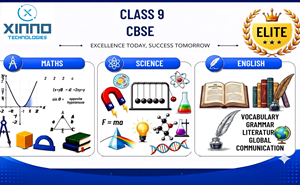
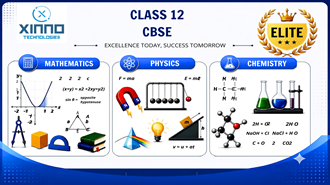
Elite
FEATURES
📚 Class
- Live Interactive Classes by Expert Faculty
- Live Discussion of Practice Questions
- Live In-Class Doubt Solving
- Live Quizzes & Performance Leaderboard
- Classroom-Like Learning Experience
- Very Small Batch Size for Better Attention
📖 After Class
- Assignments & Class Notes
- Weekly/Monthly Test Series
- Digital Study Material
- Post-Class Doubt Support
- Student Progress Reports
- Parent Portal Access
- Parent-Teacher Meetings
- Handwritten Faculty Notes
- Chapter-wise Tests
- Unlimited Practice Worksheets
- Mock Tests with Discussion
- Career Guidance Sessions
⭐ Premium Benefits
- Dedicated Personal Mentor
- One-on-One Doubt Solving Sessions
- Personalized Study Plan
- Individual Performance Analysis
- Monthly Parent Counselling
- Priority Doubt Resolution
- Exam Strategy Sessions
- Motivation & Mentorship Support
🌟 Value Adds
- Genesis Benefits Included
- Dedicated Personal Mentor
- Personalized Academic Guidance
- Priority Student Support
- Higher Success Tracking