- Description
- Curriculum
- FAQ
- Reviews
 To book a demo class, Click Here
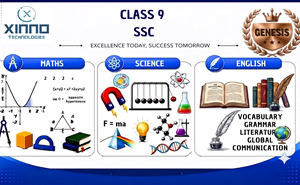
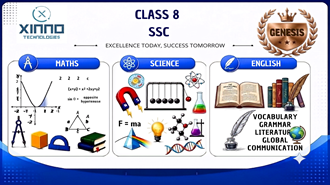
Subjects Covered: Mathematics, Science and English
SYLLABUS
MATHEMATICS
1. PLAYING WITH NUMBERS
Writing and understanding two-digit and three-digit numbers in generalized form such as (100a + 10b + c) – Solving puzzles involving missing digits represented by symbols or letters – Creating mathematical puzzles and games – Understanding the logic behind divisibility tests of 2, 3, 4, 5, 6, 7, 8, 9 and 11 – General rules of divisibility – Applications of number patterns in problem-solving.
2. RATIONAL NUMBERS
Properties of rational numbers including closure, commutative, associative and distributive properties – Representation of rational numbers on the number line – Understanding that another rational number exists between any two rational numbers – Representation of rational numbers in decimal form – Conversion of recurring decimals into rational numbers – Operations on rational numbers – Word problems involving rational numbers.
3. SQUARES, CUBES, SQUARE ROOTS AND CUBE ROOTS
Square numbers and square roots – Finding square roots using factorization and division methods – Square roots of numbers and decimals – Pythagorean triplets and their applications – Cube numbers and cube roots – Estimation of square roots and cube roots – Practical applications.
4. EXPONENTS AND POWERS
Decimal numbers in exponential notation – Integers as exponents – Laws of exponents with integral powers – Scientific notation for large numbers – Applications of exponential forms in mathematics and science.
5. ALGEBRAIC EXPRESSIONS
Addition, subtraction and multiplication of algebraic expressions – Algebraic identities such as (a ± b)² and a² – b² – Geometric verification of identities – Factorization of algebraic expressions – Division of algebraic expressions – Applications in problem-solving.
6. SIMPLE EQUATIONS
Solving linear equations in one variable – Equations arising from real-life situations – Word problems involving multiplication and division – Applications of equations in practical contexts.
7. BUSINESS MATHEMATICS
Compound ratio – Percentages – Profit and loss – Discounts – Taxes – Simple and compound interest – Direct and inverse variation – Mixed variation problems – Time and work – Time and distance problems – Applications in business and daily life.
8. GEOMETRY
Construction of quadrilaterals using different sets of measurements – Representation of three-dimensional objects in two-dimensional form – Isometric sketches – Euler’s relation for polyhedra – Congruent and similar figures – Reflection symmetry and rotational symmetry – Tessellations – Dilations – Estimation of heights and distances.
9. MENSURATION
Area of triangles, trapeziums, quadrilaterals and polygons – Area of circles and sectors – Circular paths – Surface area of cubes and cuboids – Volume and capacity – Measurement of volume using standard units – Practical applications of mensuration.
10. DATA HANDLING
Revision of mean, median and mode – Deviation method for mean – Frequency distribution tables – Cumulative frequency tables – Histograms – Frequency polygons – Frequency curves – Ogives and interpretation of statistical data.
PHYSICAL SCIENCE
1. FORCE: What is force and how it acts as a push or pull – Identification of force through daily-life activities – Types of forces – Contact forces and non-contact forces – Muscular force and its applications – Frictional force and its effects – Motion of objects on different surfaces – Normal force and tension in strings – Magnetic force and magnetic interactions – Electrostatic force and charged bodies – Gravitational force and attraction between objects – Concept of field forces – Visualization of magnetic fields – Net force and free body diagrams – Calculation of resultant force – Effects of force on motion, direction and shape of objects – Pressure and its relation to force and area of contact – Applications of pressure in everyday life.
2. FRICTION: Nature and importance of friction – Static friction, sliding friction and rolling friction – Factors affecting frictional force – Effect of surface roughness – Effect of area of contact – Effect of normal force on friction – Advantages and disadvantages of friction – Heat produced due to friction – Methods of increasing and reducing friction – Use of lubricants – Rollers and ball bearings – Fluid friction and drag – Factors affecting fluid friction – Applications of friction in daily life.
3. SYNTHETIC FIBRES AND PLASTICS: Natural and synthetic fibres – Concepts of monomers and polymers – Identification of synthetic fibres – Nylon, rayon, polyester and acrylic fibres – Preparation and properties of synthetic fibres – Advantages and limitations of synthetic materials – Plastics and their characteristics – Thermoplastics and thermosetting plastics – Uses of plastics – Environmental impact of plastics – Biodegradable and non-biodegradable substances – Principle of 4R (Reduce, Reuse, Recycle and Recover) – Recycling codes and waste management.
4. METALS AND NON-METALS: Introduction to metals and non-metals – Physical properties including lustre, sonority, malleability and ductility – Electrical and thermal conductivity – Chemical properties of metals and non-metals – Reactions with oxygen, water and acids – Rusting and corrosion – Reactivity of metals – Uses of metals and non-metals in daily life and industry.
5. SOUND: Production of sound through vibrations – Sound as a form of energy – Musical instruments and sound production – Human voice and vocal cords – Propagation of sound through solids, liquids and gases – Need of a medium for sound transmission – Structure and working of the ear – Loudness, pitch and quality of sound – Mixed frequencies and musical sounds – Noise and music – Audible range of hearing – Sound pollution, its effects and preventive measures.
6. REFLECTION OF LIGHT AT PLANE SURFACES: Formation of images by pinhole camera – Fermat’s principle – Plane mirrors and their characteristics – Laws of reflection – Plane of reflection – Image formation by plane mirrors – Characteristics of images formed in mirrors – Applications of reflection in daily life.
7. COAL AND PETROLEUM: Natural resources and sources of materials – Exhaustible and inexhaustible resources – Coal, petroleum and natural gas as fuels – Formation of fossil fuels – Petroleum refining and products – Uses of coal and petroleum products – Coke, coal tar and coal gas – Petrochemicals and their applications – Conservation of fossil fuels – Harmful effects of excessive fuel consumption – Sustainable use of energy resources.
8. COMBUSTION, FUELS AND FLAME: Combustion and burning processes – Conditions necessary for combustion – Role of oxygen in burning – Ignition temperature – Types of combustion – Fuels and their characteristics – Fire control and prevention – Structure of flame – Different zones of candle flame – Properties of fuels and efficient fuel usage.
9. ELECTRICAL CONDUCTIVITY OF LIQUIDS: Conductors and insulators – Electrical conductivity of liquids – Electrolytes and ionization – Chemical effects of electric current – Electrolytic cells – Electroplating process and applications – Importance of electroplating in industry and daily life.
10. SOME NATURAL PHENOMENA: Lightning and static electricity – Charging by friction – Types of electric charges and their interactions – Transfer of charge – Lightning conductors and safety measures – Earthquakes and their causes – Effects of earthquakes – Safety precautions during earthquakes – Earthquake-prone regions and disaster management.
11. STARS AND THE SOLAR SYSTEM: Movement of the Sun and shadows – Sundials and measurement of time – Phases of the Moon – Solar and lunar eclipses – Stars and constellations – Pole star and apparent movement of stars – Solar system and its components – Planets, asteroids, comets, meteors and meteorites – Artificial satellites – Shape and rotation of the Earth.
12. GRAPHS OF MOTION: Introduction to motion graphs – Distance-time graphs – Velocity-time graphs – Uniform and non-uniform motion – Slope of graphs and its significance – Graphical interpretation of motion – Stationary objects and moving objects through graphical representation.
BIOLOGY
1. What is Science: Science – The Individual Perspective – The Social Perspective – Science and Change – How do Scientists Work? – Scientific Method – Process Skills – Reading to Learn – Writing to Communicate – Safety in the Laboratory – Safety in Science – Some of the Divisions in Science (Science – Some Divisions).
2. Cell: The Basic Unit of Life – Discovery of the Cell – Observing Cells in a Match Stick – Observing Cells in an Onion Peel – Observing Human Cheek Cells – Cell Nucleus – Robert Brown Experiment – Observing the Nucleus in Onion Peel – Observing the Nucleus in Human Cheek Cell – Diversity in Cells – Observing Cells in the Leaf – Observing Different Cells in Human Body.
3. Microbial World – I: Invention of Microscope – Discovery of Microorganisms – Groups of Microorganisms – Observing Microorganisms in Water – Observing Fungi – Observing Bacteria – Observing Algae – Observing Protozoans and Micro-Arthropods – Observing Soil Microorganisms – Viruses – Introduction.
4. Microbial World – II: Useful Microorganisms – Observing Microorganisms in Maida-Yeast Mixture – Commercial Uses of Microorganisms – Medicinal Uses of Microorganisms – Antibiotics – Invention of Penicillin – Vaccines – Invention of Vaccine Against Smallpox – Soil Microorganisms and Soil Fertility – Nitrogen Fixation – Harmful Microorganisms – Microorganisms Causing Diseases in Human Beings – Animals – Plants – Food Preservation – Preserving Food by Heat and Cold Methods – Packing – Pasteurization.
5. Reproduction in Animals: Oviparous and Viviparous Animals – Identifying Methods of Reproduction Based on Ears, Hair and Feathers – Sexual and Asexual Reproduction – Budding in Hydra – Binary Fission in Amoeba – Male Reproductive System in Human Beings – Female Reproductive System in Human Beings – Fertilization – Development of Embryo – External and Internal Fertilization – Life Cycle of Frog – Cloning.
6. Adolescence: Changes at Adolescence – Measuring Increase in Height and Growth Rate – Secondary Sexual Characters – Adam’s Apple – Voice Change – Reproduction in Human Beings – Menstrual Cycle – Child Marriages and Demerits – Behavioural Changes – Effect of Endocrine Glands – Sweat and Pimples – Balanced Diet – Hygiene – Physical Exercise.
7. Biodiversity and Its Conservation: Biodiversity – Identifying Biodiversity in Surroundings – Diverse World of Life Under Microscope – Variations in Plants – Animals and Human Beings – Degradation of Forests – Endangered Species – Endemic Species – Red Data Book – Balance in Nature – National Parks and Sanctuaries – Conservation of Forests – Recycled Paper Preparation.
8. Different Ecosystems: Concept of Ecosystem – Structure of Ecosystem – Relationship Between Biotic Components – Changes in Ecosystem – Grassland Ecosystem – Forest Ecosystem – Desert Ecosystem – Fresh Water Ecosystem – Marine Ecosystem – Biotic and Abiotic Components – Producers – Consumers – Decomposers – Energy Flow in Ecosystem.
9. Food Production from Plants: Crops in India – Crops in Village, District and State – Long-Term and Short-Term Crops – Kharif and Rabi Crops – Effect of Night Duration on Crops – Paddy Cultivation – Soil Preparation – Ploughing – Manuring – Levelling – Seed Selection – Cleaning – Sowing – Seed Beds – Transplanting – Manures – Pesticides – Crop Protection – Pest Identification and Control – High Yield Methods – Natural and Artificial Fertilizers – Irrigation – Drip Irrigation – Weeding – Crop Rotation – Storage of Grains – Godowns and Cold Storage.
10. Food Production from Animals: Animal Husbandry – Rearing Animals in Villages – Challenges – Milk Production – Milk Collection – Pasteurization – Chilling – Livestock Selection – Livestock Management – Poultry – Broilers – Layers – Poultry Farms – Incubators – Apiculture – Honey Bees and Life Cycle – Honey Extraction – Fisheries – Marine Fisheries – Fresh Water Fisheries – Aquaculture.
11. Not for Drinking – Not for Breathing: Vehicles and Pollution Check – Pollution Under Control Certificate – Atmospheric Pollution – Air Pollution – Pollutants – Primary and Secondary Pollutants – Causes of Pollution – Natural Calamities – Human Activities – Nuclear Plants – Fertilizers – Insecticides – Deforestation – Industrial Effluents – Chlorofluorocarbons – Mining – Effects of Air Pollution – Aerosols – Hydrogen Sulphide – Carbon Monoxide – Control Measures – Water Pollution – Testing Water Samples – Musi River Pollution – Definite and Indefinite Pollutants – Plant Nutrients – Biodegradable Wastes – Heat Pollution – Solid Wastes – Toxic Chemicals – Control of Water Pollution.
12. Why Do We Fall Ill: Health and Its Significance – Meaning of Being Healthy – Community Health – Personal Health – Healthy and Disease-Free Conditions – Diseases and Causes – Infectious and Non-Infectious Diseases – Short-Term and Long-Term Diseases – Carriers of Diseases – Bacteria – Viruses – Protozoans – Disease Spread – Pathogens – Changes in Organ Systems – Disease Prevention Principles and Actions.
ENGLISH
Unit 1. Family: A Reading: The Tattered Blanket (Story) – B Reading: My Mother (Poem) by Kamala Das – C Reading: A Letter to a Friend – Vocabulary: Synonyms – Grammar: Noun Phrases – Written Discourses: Short Essay – Oral Discourses: Debate, Description, Choreography.
Unit 2. Social Issues: A Reading: Oliver Asks for More (Story) by Charles Dickens – B Reading: The Cry of Children (Poem) by E.B. Browning – C Reading: Reaching the Unreached (Essay) – Vocabulary: Compound Adjectives – Grammar: Yes/No Questions, Question Tags – Written Discourses: Diary, Profile – Oral Discourses: Discussion.
Unit 3. Humanity: A Reading: The Selfish Giant I (Play) – B Reading: The Selfish Giant II (Play) by Oscar Wilde – C Reading: The Garden Within (Poem) – Vocabulary: Phrasal Verbs, Antonyms, Sound Words, Simile, Metaphor, Personification – Grammar: Gerunds – Written Discourses: Notice, Narrative, Description.
Unit 4. Science and Technology: A Reading: The Fun They Had (Science Fiction) by Isaac Asimov – B Reading: Preteen Pretext (Poem) – C Reading: The Computer Game (Play) – Vocabulary: Antonyms, Order of Adjectives – Grammar: Adverbs and Relative Clauses – Written Discourses: Letter, Poster – Oral Discourses: Debate.
Unit 5. Education and Career: A Reading: The Treasure Within Part I & II (Interview) – C Reading: They Literally Build the Nation (Essay) – Vocabulary: Collocations, Same Word as Verb and Noun – Grammar: Used To – Written Discourses: Script for Compeering – Oral Discourses: Compeering.
Unit 6. Art and Culture: A Reading: The Story of Ikat (Description) – B Reading: The Earthen Goblet (Poem) by Harindranath Chattopadhyaya – C Reading: Maestro with a Mission (Biography) – Vocabulary: Homonyms, Homophones – Grammar: Reported Speech, Tense and Time – Written Discourses: Profile, Biographical Sketch.
Unit 7. Woman Empowerment: A Reading: Bonsai Life Part I & II (Story) by Abburi Chayadevi – C Reading: I Can Take Care of Myself (Story) – Vocabulary: Phrasal Verbs, Similes, Idioms – Grammar: Subject and Predicate – Written Discourses: Poster, Report Writing – Oral Discourses: Debate.
Unit 8. Social Service: A Reading: Dr. Dwarakanath Kotnis (Biography) – B Reading: Be Thankful (Poem) – C Reading: The Dead Rat (Story) by P.C. Roy – Vocabulary: Semantic Mapping, Idiomatic Expressions with Heart – Grammar: Coordinate, Subordinate and Compound Conjunctions – Written Discourses: News Report, Essay – Oral Discourses: Speech.
Reading and revising lessons regularly.
Understanding concepts instead of memorizing.
Practicing worksheets, assignments, and sample papers.
Strengthening grammar, vocabulary, formulas, and scientific concepts.
Solving additional practice questions.
Asking doubts whenever needed.
Maintaining consistency and a positive attitude toward learning.
Building confidence and motivation.
Encouraging questions and curiosity.
Focusing on conceptual understanding rather than rote learning.
Providing interactive classroom sessions.
Giving regular assignments and practice exercises.
Conducting tests and performance evaluations.
Offering timely doubt-clearing support.
Helping students develop analytical and problem-solving skills.

Genesis
FEATURES
📚 Class
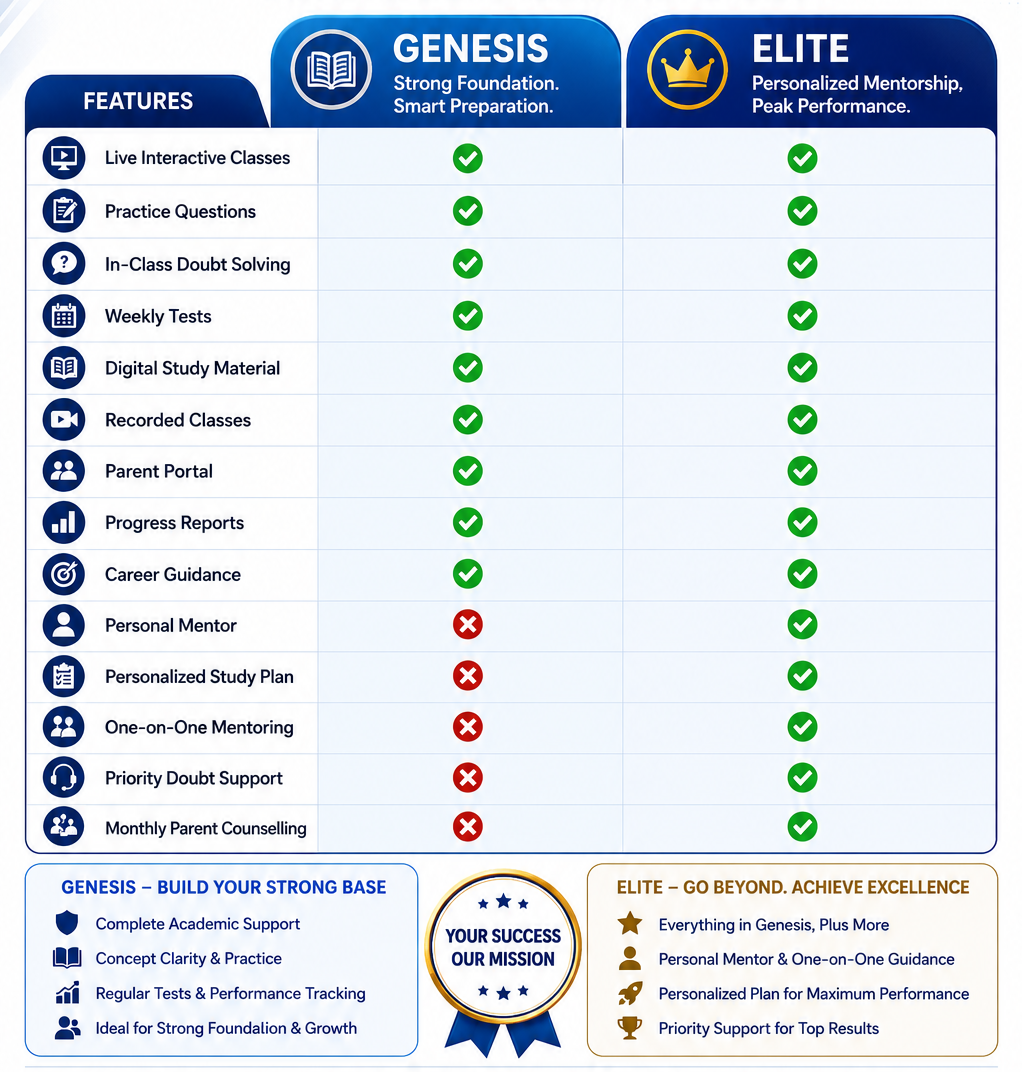
- Live Interactive Classes by Expert Faculty
- Live Discussion of Practice Questions
- Live In-Class Doubt Solving
- Live Quizzes & Performance Leaderboard
- Classroom-Like Learning Experience
- Small Batch Size for Better Attention
After Class
- Assignments & Class Notes
- Weekly/Monthly Test Series
- Digital Study Material
- Post-Class Doubt Support
- Student Progress Reports
- Parent Portal Access
- Parent-Teacher Meetings
- Handwritten Faculty Notes
- Chapter-wise Tests
- Unlimited Practice Worksheets
- Mock Tests with Discussion
- Career Guidance Sessions
🌟 Value Adds
- Personalized Learning Experience
- Regular Performance Tracking
- Free Career Guidance